

Titanium alloys in the dental field
I. Widespread Applications of Titanium AlloysWith the progress of society and the improvement of living standards, changes in diet have aggravated the wear and damage of teeth. Toothache often leads to psychological problems such as depression and anxiety. However, the rapid development of modern medicine provides a solution. Due to their excellent physical and chemical properties, titanium alloys are widely used in dentistry to help patients regain their health and confidence.
-
physical and chemical properties:titanium alloy provides stable support and biocompatibility with human tissues. As a silvery white metal, titanium stands out for its chemical stability, resistance to extreme temperatures and corrosion resistance to strong acids and alkalis. In alveolar bone implants, titanium exhibits excellent biocompatibility and coexists harmoniously with hard bone tissue.
-
in orthodontics:orthodontics focuses on the correction of malocclusion by mechanical or functional appliances. Titanium alloys are lightweight, corrosion-resistant and highly machinable, making them ideal for stationary and functional parts. & Beta;-Titanium alloys can be drawn into thin wires, while cold-worked grade 4 CP titanium serves as a high-performance alternative.
II. The unique advantages of titanium alloy
-
Biocompatibility and Personalized Therapy:Titanium enables personalized dental care while minimizing the risk of rejection. Common grades such as TC4,TC4ELI,GR5 and GR23 play a key role, and their different compositions allow precise matching with different clinical needs.
-
composition and grades:different grades provide unique properties suitable for various situations and promote the accuracy of dental treatment planning.
III. Specialized subfields of dental applications
-
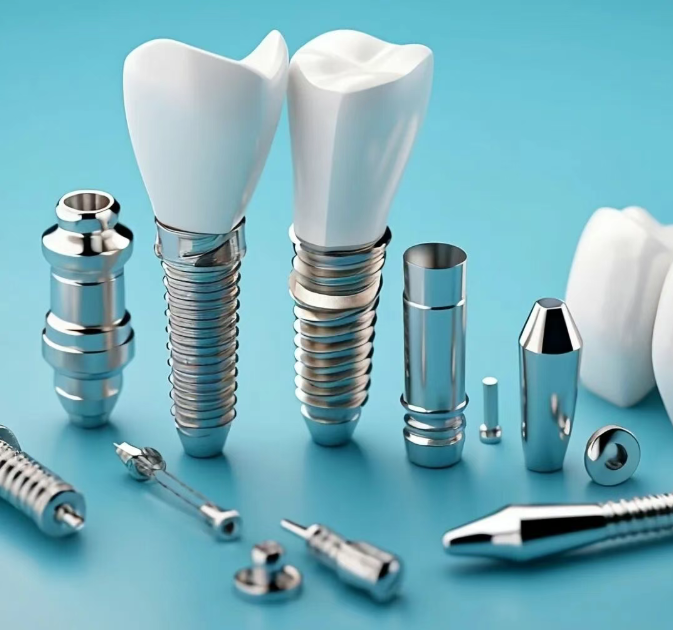
prosthodontics:Designed to restore tooth function and aesthetics, titanium alloys are very suitable for implants due to their mechanical strength and chemical stability, thereby ensuring the long-term stability of the prosthesis.
-
Planting:titanium has a history of more than 50 years, because of its superior osseointegration, has become the main material of implantology. It effectively mitigates electrochemical and corrosion effects, ensuring long-term success. Studies have shown that titanium restorations maintain good form and function over time, reducing the need for secondary surgery and saving patients time and cost.


